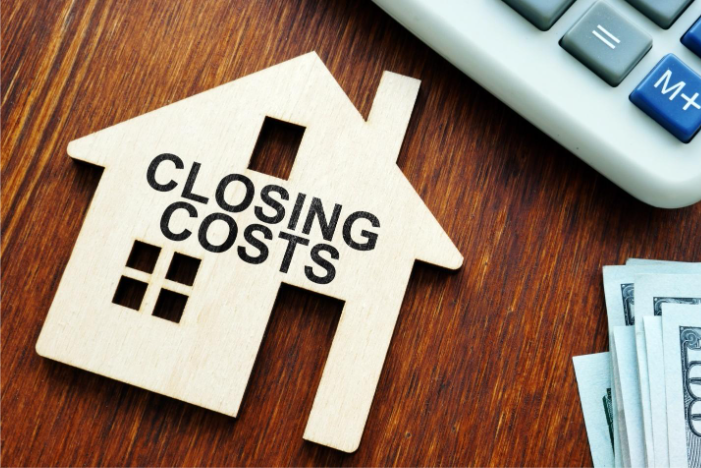
The high price tag on closing costs often takes first-time home buyers by surprise. If you budgeted for a low down payment — say, 3% — closing costs could double your out-of-pocket expenses. The lender needs to guarantee you will pay things like property taxes and homeowners insurance.
Homeowner’s insurance
If you’re a first-time homebuyer, it’s easy to get caught up in the excitement of making plans for your new space. Even as you dream about color schemes, furniture placement, and the ideal layout of your new home, you’re probably also keeping a close eye on interest rates and your future mortgage payment. However, there are other transaction details you can easily overlook, such as the myriad of additional costs and fees charged to buyers as part of their home purchase transaction. Additionally, certain closing costs can sometimes be added to a buyer’s loan amount, rather than paying it in cash at closing.
Faster, easier mortgage lending
This document shows the new ownership of the property, and counties typically charge a nominal fee for filing the new deed. Using our proprietary cost database, in-depth research, and collaboration with industry experts, we deliver accurate, up-to-date pricing and insights you can trust, every time. The lender must provide a closing disclosure at least 3 business days before the scheduled closing or settlement.
Survey Fee
Meanwhile, the median asking price for U.S. home — what homeowners hope their property will sell for — jumped to a record $415,925 for the four weeks ended April 21, Redfin said. Taking advantage of California homeownership assistance programs is a prime way to cut back on the closing costs. While you’re the one paying for the insurance, the coverage is for your lender; because you haven’t put down 20 percent, PMI protects your lender in case of loan default. Before closing, the lender will send a third-party appraiser to your new home to make sure it’s priced at the right value. The home appraisal is an essential step in the homebuying process – if you default on your home loan, your lender needs to know they can sell the property to make up for the outstanding balance.

Generally, closing costs average 2% to 6% of the purchase price. Many lenders, real estate websites, and financial institutions offer online cost calculators to provide an estimated range for your closing costs. These calculators typically ask for details like your loan amount, location, and property value. The closing costs on a house are $6,000 to $18,000 on average, depending on the home purchase price and down payment.
Mortgages
Will need to have $25,800 to cover closing costs, and that doesn't even include the down payment! That makes up 4% of the average sales price, which is below the 4.88% in Pennsylvania. Closing costs are the total fees that are paid for the services required when you purchase a new home or refinance your existing home. Closing costs are usually paid by the buyer of the home, but the seller pays some closing costs in the form of real-estate commission. 4) Capital Funding Financial recommends negotiating with the lender to include lender fees in the loan, reducing your upfront fees. Sometimes referred to as reserve fees or prepaids, escrow funds hold reserved money for property taxes, homeowners insurance premiums and mortgage insurance.
Washington First-Time Home Buyer 2024 Programs and Grants - The Mortgage Reports
Washington First-Time Home Buyer 2024 Programs and Grants.
Posted: Fri, 19 Apr 2024 07:00:00 GMT [source]
Phipps says she fell in love with the property and knew they had to go see it immediately, but "when we finally got to see the house [in person], we saw it was a lot worse." There are any number of reasons why a homeowner might choose to sell. Chief among them, though, is likely to be the money you stand to make on the sale — especially if your home’s value has appreciated significantly since you bought it. Every homebuyer should start with the California Housing Finance Agency’s slate of homeownership assistance programs.
Closing costs can be quite hefty given that they depend on the price of the house, but there are ways to save money or simply defer closing costs to a later date. One of the highest closing costs is lender fees, especially origination charges, which can be close to 1% of the loan amount. If you shop around for different lenders, you may be able to negotiate the origination fee down, which may lead to thousands of dollars in savings. Other items such as title insurance, legal fees, mortgage insurance premiums, and others can also be negotiated, which will provide additional savings. Closing costs are the fees that a buyer and a seller need to pay at the time of closing on a real estate deal.
They are still in the process of getting the permits they need to start construction. There was a lot of mold and potentially hazardous areas in the house, that the couple tackled themselves. "Imagine having a house back in the day and you could play music everywhere in it from a record player," he says. "The record player was still there when we bought the house, so that was really cool."
The amount of this fee will vary depending on where you live and which company your lender uses. If your property is located in an HOA, your homeowners association transfer fee covers the cost of moving HOA fees from the seller to the buyer. It ensures that the seller is up to date on their HOA dues and provides you a copy of the association’s payment and dues schedule, as well as HOA financials. Some lenders charge an application fee to process your loan request. The application fee may be a separate fee or used as a deposit that will be applied to other closing costs.
In a refinance transaction, however, the homeowner pays the closing costs. Certain loans have upfront fees that can significantly increase your total closing costs. FHA loans, for instance, have an upfront mortgage insurance premium that costs 1.75% of the loan amount.


No comments:
Post a Comment